
In this chapter
- What every lakehouse book and platform page actually documents, and where all of it begins.
- Three receipts that show the industry compressing the work that decides success.
- The bridges map: the four gaps between your sources and a gold layer people trust.
- Why modelers and engineers end up solving the same problem in different rooms.
Every platform makes you the same offer: land your data, and our AI does the rest. This book is about everything “the rest” assumes you already did.
The offer is not a trick. The engines are genuinely excellent, storage is cheap, the file formats are open, and AI now writes working pipeline code in minutes. As far as it goes, the promise holds. What this chapter examines is exactly how far it goes, and the work it quietly hands back to you.
What does every lakehouse book actually document?
Pick up any book about the lakehouse and you will learn a great deal: file formats and table formats, engines and clusters, transaction logs and time travel. Open any vendor’s architecture page and you get the storage mechanics of that same picture. Somewhere on every one of those pages sits the same diagram: three boxes labeled bronze, silver, and gold, with confident arrows between them.
Now look at where all of that material begins. The book starts once the data is in the lake. The architecture page starts once the data is in the lake. The diagram’s first box is data that has already landed. Everything before that moment, along with everything the arrows between the boxes quietly require, is treated as either finished or trivial.
None of it is wrong. The engines deserve their documentation, and you will need it. But a lakehouse program does not fail because someone misconfigured file sizes. It fails in the parts the shelf and the stack agree not to write about: agreeing what things mean, knowing what your sources actually contain, and deciding what shape the integrated middle should take. You do not have to take that on faith, because three receipts follow.
Watch the deciding work shrink to two pages
A sixty-page primer spends two pages on it. One widely distributed, vendor-sponsored cloud data warehousing ebook, the kind many data leaders keep on their desk, runs about sixty pages: delivery models, evaluation criteria, security, cost, and a six-step getting-started plan. Everything upstream of loading, the entire journey from your source systems to usable data, is compressed into two pages of advice about streamlining the data pipeline. The premise underneath is plain: value begins once your data is inside the platform.
The official implementation guide gives silver one line. Microsoft’s implementation page for the medallion architecture in Fabric spends roughly 2,200 words on the pattern, and the silver layer, the place where your data supposedly becomes an integrated, trustworthy asset, gets this job description: “Fix errors, standardize formats, and remove duplicates.” Everything after that is storage mechanics: Delta versus Parquet, shortcuts, file sizing, retention windows, and clustering choices. The page answers how to store a silver layer. It never answers how to design one.
The glossary names two methods and teaches neither. Databricks’ medallion glossary says the silver layer’s data is “matched, merged, conformed and cleansed (‘just-enough’)”, then delivers its entire modeling guidance in two sentences: “From a data modeling perspective, the Silver Layer has more 3rd-Normal Form like data models. Data Vault-like, write-performant data models can be used in this layer.” Two methods are named, and neither one is chosen, taught, or sequenced.
Read those verbs again: matched, merged, conformed. Matched on which keys, and agreed by whom? Merged how, when your sources disagree? Conformed to whose definitions, recorded where? Each verb is a project in its own right, and none of them gets a page.
The real work sits on the arrows, not in the boxes
Here is the medallion architecture diagram you have seen a hundred times, redrawn honestly. The three boxes shrink, because the boxes are the easy part now, and the arrows grow, because each arrow carries a question no engine answers for you.
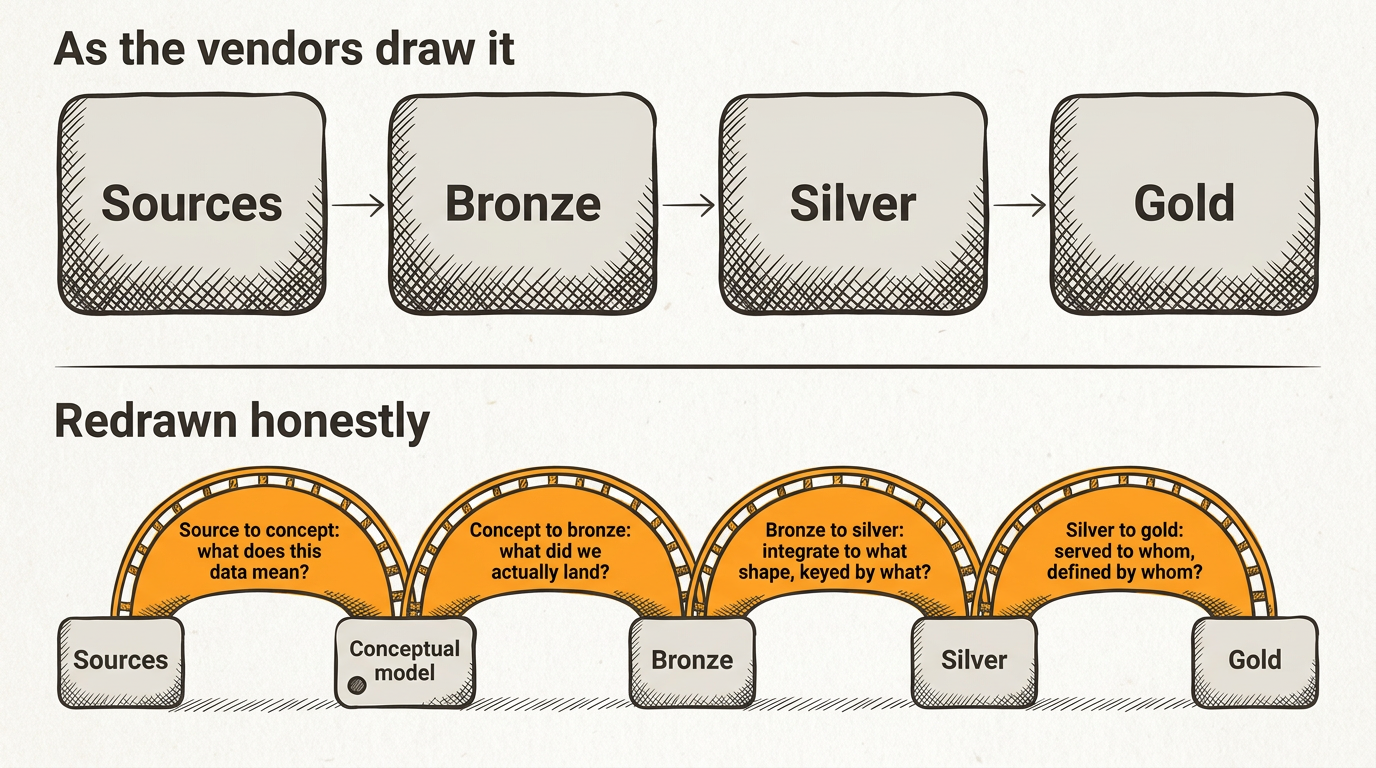 Figure 1.1: the bridges map. The boxes shrink, because the boxes are the
easy part now, and the arrows grow, because each arrow carries a question no
engine answers for you.
Figure 1.1: the bridges map. The boxes shrink, because the boxes are the
easy part now, and the arrows grow, because each arrow carries a question no
engine answers for you.- Source to concept: what does this data mean? Before you make a single platform decision, someone has to establish the business language: the entities, the attributes, the relationships, the names. This is not documentation written after the fact, it is the working vocabulary everything else maps to.
- Concept to bronze: what did we actually land? Sources drift, and their documentation rarely matches what the columns hold, so somebody has to know each system well enough to say what a field really contains, which keys really identify a customer, and where the quality problems live, all before that data gets treated as raw truth.
- Bronze to silver: integrate to what shape, keyed by what? This is the bridge where programs stall, because matching, merging, and conforming each demand what the verbs assume you already have: a target shape to conform to, agreed keys to match on, and a record of what you decided when the sources disagreed. That is design work, and it is exactly the work the official pages compress into a sentence.
- Silver to gold: served to whom, defined by whom? A metric is a business definition wearing a table. When nobody agreed on the definition back at the first bridge, gold becomes the place where every department discovers a different number.
The first three bridges get chapters of their own, and the fourth is why gold sits outside this book’s scope. What they share is that none of them belongs to a platform, and that is the point of the map: you can change engines without touching a single bridge question, and you can answer every bridge question without choosing an engine.
The people part. Ask who owns each bridge in your organization today. Source to concept usually belongs to a modeler, if anyone holds it at all. Concept to bronze belongs to whoever wrote the ingestion job, while bronze to silver belongs, by default, to whichever engineer picked up the ticket. Silver to gold lands with the analyst under the most deadline pressure. That leaves four bridges with four accidental owners and no shared record of the decisions between them. The gap in your lakehouse is not a missing feature, it is a missing owner.
Two rooms, one problem
There is a reason the bridges go unowned, and it is older than the lakehouse. Data modelers and data engineers are solving the same problem in different rooms. In one room, modelers settle what a Customer is: the definition, the identifying keys, the relationships that matter. In the other, engineers load customer data through pipelines, schedules, and schemas. The model captures meaning but never touches the platform, and the pipelines deliver data nobody can trace back to an agreed definition.
So the model becomes a poster on the wall, and the warehouse becomes undocumented debt.
Nobody chose this split; the tools imposed it. Modeling tools export diagrams and documents, engineering tools consume code and configuration, and nothing carries a decision from the first room into the second. Every mapping from meaning to data gets re-derived in someone’s head, at the keyboard, under deadline, unrecorded. The lakehouse did not create this divide. It raised the price of it, because now an AI sits in the second room, generating code at speed, with no way to see anything that was decided in the first.
A field story (a composite, not a single real company: assembled from the recurring pattern, with no real names or numbers). A retail company ships bronze in eight weeks and celebrates: forty source tables landing daily, dashboards of pipeline counts, green ticks everywhere. Eighteen months later, “silver” turns out to be a rename pass, the same forty tables with cleaner column names, three competing customer identifiers, and a business that still reconciles revenue in spreadsheets because no two teams agree what an order is. Every metric that made the early demos sat on the source side: systems connected, loads per day, pipelines generated. Not one of them measured whether anything was integrated. The program did not fail at storage; it never started the integration.
Regardless of stack. Swap the platform in that story and nothing changes. On Databricks, on Snowflake, on Fabric, on anything else, the four bridge questions keep their exact names: what does this data mean, what did we actually land, integrate to what shape keyed by what, served to whom and defined by whom. Platform choice changes how you execute the answers. It has never once supplied them.
What this book promises
This is not another platform book, and it is not a modeling religion either. On the question of Data Vault versus third normal form versus dimensional-first versus one big table, the book stays deliberately neutral. It lays out what each shape optimizes for, gives you a decision framework grounded in your sources and your team, and then shows you the contract every shape demands regardless: agreed language, known sources, recorded mappings, explicit keys, captured metadata.
The arc follows those bridges. Chapters 3 through 5 cover the work that comes before the platform: speak before you store, know your sources, and treat mapping as a discipline with recorded decisions. Chapters 6 through 8 build the integrated middle, where you choose a shape without a religion, generate the integration layer from templates instead of handcrafting it, and capture the metadata contract that lets a template engine, a new hire, or an AI do the building. Chapter 9 then closes the trust loop with lineage and governance, and chapter 10 turns all of it into six steps you can start on Monday.
One thread runs through every chapter: the same captured decisions that make your integration layer buildable are exactly what AI needs to help you build it. The platforms are right that AI can do the rest. They are simply quiet about the fact that “the rest” runs on context, and the context is yours to create.
The platforms are ready and the engines are documented, so the missing work is yours. By the end of this book you will know exactly what that work is, who does it, and what to capture along the way.